


Ma Phuc Pass, Cao Bang: Complete Travel Guide to Vietnam's Scenic Mountain Pass
Ma Phuc Pass is one of the most scenic mountain roads in northern Vietnam, offering travelers an unforgettable journey through the dramatic limestone landscapes of Cao Bang Province. Located on the main route connecting Cao Bang City with Ban Gioc Waterfall, the pass is a popular stop for road trippers, photographers, and motorbike riders exploring the UNESCO Global Geopark.
Unlike destinations where visitors spend hours sightseeing, Ma Phuc Pass is best experienced on the road itself. A series of winding curves, rugged limestone peaks, green valleys, and changing mountain scenery create one of the most memorable drives in the region. Every season brings a different perspective, from lush greenery during summer to golden rice fields and clear mountain views in autumn.
Although many travelers pass through without stopping for long, Ma Phuc Pass is well worth including in any Cao Bang itinerary. Several viewpoints along the road provide excellent opportunities to admire the surrounding mountains, capture panoramic photographs, and take a short break before continuing toward famous attractions such as Ban Gioc Waterfall, Nguom Ngao Cave, Phong Nam Valley, and Angel Eye Mountain. For anyone exploring northeastern Vietnam by car or motorbike, this iconic Cao Bang mountain pass is an essential part of the journey.
Where Is Ma Phuc Pass?
Featured Snippet
Ma Phuc Pass is a scenic mountain pass in Quoc Toan Commune, Quang Hoa District, Cao Bang Province, Vietnam. It lies on the main road connecting Cao Bang City with Ban Gioc Waterfall, making it one of the most popular scenic stops for travelers exploring the eastern part of Cao Bang. The pass is known for its winding roads, limestone mountains, and panoramic viewpoints.
Administrative Location
Ma Phuc Pass Cao Bang is located in Quoc Toan Commune, Quang Hoa District, approximately halfway between Cao Bang City and several of the province's best-known attractions. As part of the UNESCO Non Nuoc Cao Bang Global Geopark, the surrounding landscape features dramatic limestone karsts, narrow valleys, forests, and traditional villages.
Most visitors pass through Ma Phuc Pass Vietnam while traveling toward Ban Gioc Waterfall, Nguom Ngao Cave, or Phong Nam Valley. Because it sits directly on the main tourist route, reaching the pass requires no detour, making it an easy stop for sightseeing and photography.
Distance from Major Destinations
The pass is conveniently positioned between Cao Bang City and the eastern attractions, allowing travelers to combine several destinations in a single day or over a longer road trip.
| Destination | Distance to Ma Phuc Pass | Estimated Driving Time |
| Cao Bang City | 22 km | 30–35 minutes |
| Angel Eye Mountain | 18 km | 30 minutes |
| Thang Hen Lake | 28 km | 45–50 minutes |
| Phong Nam Valley | 45 km | 1 hour |
| Ban Gioc Waterfall | 68 km | 1 hour 30 minutes |
| Nguom Ngao Cave | 71 km | 1 hour 35 minutes |
| Hanoi | 285 km | 6–7 hours |
Google Maps
Finding Ma Phuc Pass is straightforward using Google Maps. Simply search for "Ma Phuc Pass" or "Đèo Mã Phục", and navigation will guide you along the main provincial route between Cao Bang City and Ban Gioc Waterfall. Mobile signal is generally available throughout most of the journey, though downloading an offline map before leaving Cao Bang City is recommended for uninterrupted navigation in mountainous areas.
Road Conditions and Terrain
The road across Deo Ma Phuc is fully paved and suitable for cars, motorbikes, and small buses. The climb includes a series of sweeping bends and gentle elevation changes rather than extremely steep gradients. While the route is considered safe under normal weather conditions, drivers should reduce speed on sharp corners and remain cautious during periods of heavy rain or fog. The surrounding terrain consists of towering limestone mountains, forested slopes, and open valleys, creating one of the most picturesque sections of any Cao Bang mountain pass journey.
Why Is Ma Phuc Pass Famous?
Limestone Mountains
One of the main reasons Ma Phuc Pass is famous is its spectacular limestone landscape. The pass cuts through towering karst mountains that are part of the UNESCO Non Nuoc Cao Bang Global Geopark, creating a dramatic natural corridor unlike most mountain roads in Vietnam. Massive rock formations rise on both sides of the highway, while narrow valleys and forested slopes add depth to the scenery. These ancient limestone mountains have been shaped over millions of years, giving the area a distinctive geological character that attracts both nature lovers and photographers.
Scenic Mountain Road
Driving Ma Phuc Pass is considered one of the highlights of a road trip across Cao Bang. Rather than long, steep climbs, the route features a series of smooth curves that wind naturally through the mountains. Every turn reveals a different perspective of the surrounding landscape, making the drive itself part of the sightseeing experience. The well-paved road, combined with relatively light traffic, allows travelers to enjoy the scenery at a comfortable pace while stopping safely at designated viewpoints along the way.
Panoramic Views
Another feature that makes Ma Phuc Pass viewpoint so popular is the wide panoramic view across limestone peaks and green valleys. Several elevated sections of the pass provide natural overlooks where visitors can pause to admire the landscape stretching into the distance. From these viewpoints, travelers can clearly appreciate the scale of Cao Bang's mountainous terrain, with winding roads weaving between rocky ridges and patches of farmland below. The combination of elevation and open visibility makes the pass one of the best places to experience the region's scenery.
Part of the UNESCO Global Geopark
Ma Phuc Pass Vietnam lies within the UNESCO Non Nuoc Cao Bang Global Geopark, an internationally recognized area known for its exceptional geological heritage. The surrounding karst formations, valleys, caves, and mountain ecosystems represent millions of years of natural evolution. Traveling through the pass offers more than beautiful scenery—it provides an opportunity to experience one of Southeast Asia's most remarkable limestone landscapes, where geological features and traditional rural communities coexist within a protected environment.
One of the Best Mountain Passes in Cao Bang
Among every Cao Bang mountain pass, Deo Ma Phuc is consistently regarded as one of the most scenic and accessible. Its convenient location on the route to Ban Gioc Waterfall, together with impressive mountain views and excellent road conditions, makes it a natural stop on nearly every eastern Cao Bang itinerary. Whether visitors are traveling by motorbike, car, or guided tour, Things to do at Ma Phuc Pass mainly revolve around enjoying the drive, taking panoramic photographs, and experiencing one of northern Vietnam's most memorable mountain landscapes before continuing to nearby attractions.
Best Time to Visit Ma Phuc Pass
Featured Snippet
The best time to visit Ma Phuc Pass is from September to November, when the weather is cooler, visibility is excellent, and the surrounding mountains are at their most scenic. Early morning and late afternoon provide the clearest views and the best lighting for photography. While the pass is accessible year-round, each season offers a different landscape and driving experience.
Spring (February–April)
Spring brings mild temperatures and fresh greenery to Ma Phuc Pass. Forests and hillsides become vibrant after the cooler winter months, while local farmland begins a new growing season. The comfortable weather makes this an excellent time for sightseeing, motorbike trips, and short stops at the viewpoints. Visibility is generally good, although occasional light rain may appear toward the end of the season.
Summer (May–August)
Summer transforms the surrounding valleys into rich shades of green. Afternoon showers are common, especially between June and August, so travelers should check the weather before setting out. The paved road remains accessible, but wet conditions can reduce visibility on some bends. Despite the rain, the limestone mountains appear particularly striking against lush vegetation, making Driving Ma Phuc Pass a rewarding experience for nature lovers.
Autumn (September–November)
Autumn is widely considered the finest season to explore Ma Phuc Pass Cao Bang. Cooler temperatures, lower humidity, and clear skies create ideal conditions for panoramic views across the limestone mountains. During September and October, nearby valleys begin turning golden as rice fields mature, adding extra color to the landscape without changing the character of the mountain pass itself. This is also the most popular period for photography and road trips.
Winter (December–January)
Winter offers crisp air and long-distance visibility on many clear days. Morning temperatures can be quite cool, and fog occasionally forms in the early hours before gradually lifting. Travelers should wear warm clothing if riding a motorbike, especially before sunrise. Although the scenery appears quieter than in other seasons, the dramatic limestone peaks remain impressive throughout winter.
Best Months and Best Time of Day
The most recommended months are September–October and October–November, when pleasant weather and stable road conditions provide an enjoyable driving experience. For photographers, the time of day can be just as important as the season.
| Time | Why Visit |
| September–October | Clear skies, comfortable temperatures, excellent visibility, golden valley scenery nearby |
| October–November | Cool weather, stable conditions, vibrant mountain landscapes, ideal for road trips |
| Sunrise (6:00–8:00 AM) | Soft light, fewer vehicles, peaceful atmosphere, fresh mountain air |
| Sunset (4:30–6:00 PM) | Warm golden light, dramatic shadows across limestone peaks, beautiful panoramic photography |
Best Things to Do at Ma Phuc Pass
Stop at the Viewpoint
One of the best things to do at Ma Phuc Pass is stopping at one of its roadside viewpoints. Several widened sections of the road provide safe places to park and enjoy uninterrupted views across limestone mountains and deep valleys. These viewpoints allow visitors to appreciate the scale of the surrounding landscape without leaving the main route. Even a short stop of 10 to 15 minutes is enough to experience why Ma Phuc Pass is considered one of the most scenic roads in Cao Bang.
Drive the Mountain Pass
The highlight of visiting Ma Phuc Pass Vietnam is simply driving through it. The road winds gently around mountain slopes with a series of sweeping bends that reveal constantly changing scenery. Unlike more demanding mountain roads in northern Vietnam, Driving Ma Phuc Pass is suitable for most travelers with basic driving experience. Whether traveling by motorbike, private car, or tour vehicle, the journey itself becomes one of the most memorable parts of exploring Cao Bang.
Landscape Photography
The combination of limestone peaks, winding roads, and open valleys makes Ma Phuc Pass a rewarding destination for landscape photography. Wide-angle lenses work particularly well for capturing the dramatic mountain scenery, while telephoto lenses help isolate the layers of limestone ridges stretching into the distance. Because the viewpoints are located above the surrounding valleys, photographers can create panoramic compositions that showcase the distinctive geology of the UNESCO Global Geopark.
Drone Photography
For licensed drone operators, Ma Phuc Pass viewpoint offers excellent aerial perspectives of the mountain road and surrounding karst landscape. From above, the pass reveals its winding curves weaving naturally through towering limestone formations. Before flying, visitors should check current local regulations, avoid operating near residential areas or traffic, and maintain safe distances from other travelers. Calm weather and good visibility generally produce the best aerial images.
Watch Sunrise
Early morning is one of the quietest times to experience Ma Phuc Pass. As the first sunlight reaches the limestone peaks, soft light gradually illuminates the valleys and mountain slopes, creating excellent conditions for sightseeing and photography. Traffic is usually lighter during the morning hours, allowing visitors to enjoy a more peaceful atmosphere while taking in the panoramic scenery before continuing toward nearby attractions.
Watch Sunset
Late afternoon offers another beautiful perspective of Deo Ma Phuc. As the sun lowers behind the mountains, warm light highlights the textures of the limestone cliffs and casts long shadows across the valleys below. The changing light creates a dramatic contrast that appeals to photographers and travelers looking for memorable roadside views. Sunset is also an ideal time for a short break before returning to Cao Bang City or continuing toward Ban Gioc.
Explore Nearby Villages
Beyond the viewpoints, visitors can explore several small rural communities located near Ma Phuc Pass Cao Bang. These villages provide a glimpse into daily life in the mountainous region, where traditional farming, local markets, and ethnic minority culture remain an important part of the landscape. Many travelers combine the pass with nearby destinations such as Phong Nam Valley, Angel Eye Mountain, Thang Hen Lake, Nguom Ngao Cave, and Ban Gioc Waterfall, making the mountain pass a natural starting point for discovering eastern Cao Bang.
Nearby Attractions from Ma Phuc Pass
One advantage of visiting Ma Phuc Pass is its location along the main sightseeing route in eastern Cao Bang. Most of the province's best-known attractions can be reached within a short drive, making it easy to combine several destinations into a one-day or multi-day itinerary.
Angel Eye Mountain
Located southwest of Ma Phuc Pass, Angel Eye Mountain is one of Cao Bang's most recognizable natural landmarks. The mountain is famous for its enormous circular hole passing through the limestone cliff, creating the appearance of a giant eye. Surrounded by open grasslands, small lakes, and traditional villages, it offers a completely different landscape from the mountain pass. Many travelers visit both destinations on the same day because the roads between them are convenient and highly scenic.
Thang Hen Lake
Thang Hen Lake is another popular stop within the UNESCO Non Nuoc Cao Bang Global Geopark. The lake is known for its calm emerald water, forested limestone mountains, and peaceful atmosphere. Unlike the winding roads of Ma Phuc Pass, Thang Hen provides a relaxing environment where visitors can walk along the shoreline, take boat trips, or simply enjoy the mountain scenery. The journey between the two destinations also passes through attractive rural landscapes.
Phong Nam Valley
For travelers interested in rural scenery, Phong Nam Valley is an excellent addition to a Ma Phuc Pass itinerary. The valley is home to traditional villages, rice fields, winding rivers, and limestone mountains that represent some of Cao Bang's most picturesque countryside. It is particularly popular with photographers because the open landscape contrasts beautifully with the dramatic mountain terrain surrounding the pass. Many visitors continue from the valley toward Ban Gioc Waterfall along one of the province's most scenic driving routes.
Ban Gioc Waterfall
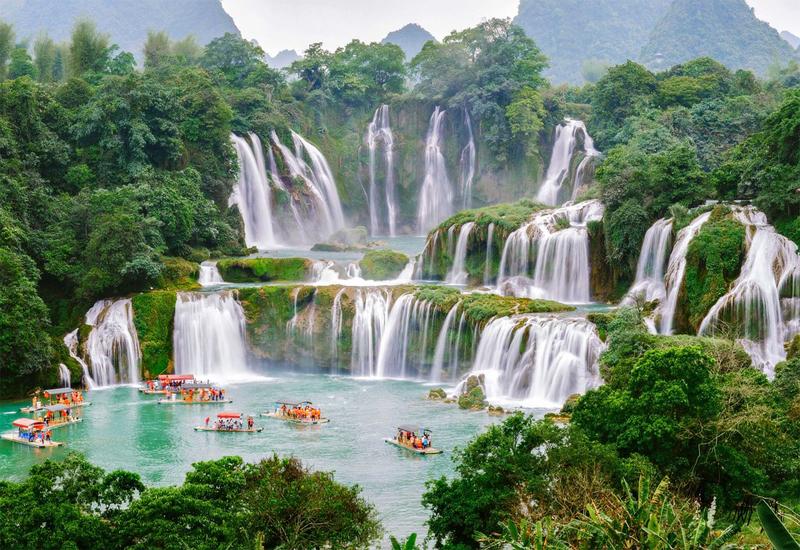
No trip through Ma Phuc Pass Vietnam is complete without continuing to Ban Gioc Waterfall, one of the largest and most spectacular waterfalls in Southeast Asia. Located on the Vietnam–China border, the waterfall is famous for its wide cascades, turquoise river, and impressive natural setting. Since Ma Phuc Pass lies directly on the main route to Ban Gioc, nearly every traveler heading to the waterfall passes through this mountain road before reaching the final destination.
Nguom Ngao Cave
Only a short drive from Ban Gioc Waterfall, Nguom Ngao Cave is one of the finest limestone caves in northern Vietnam. Inside, visitors can explore spacious chambers filled with impressive stalactites and stalagmites that have formed over thousands of years. Combining Ma Phuc Pass, Ban Gioc Waterfall, and Nguom Ngao Cave creates one of the most popular sightseeing routes in Cao Bang, offering mountain scenery, waterfalls, and underground geological formations in a single journey.
Cao Bang City
Most travelers begin and end their trip in Cao Bang City, the transportation hub of the province. The city offers hotels, restaurants, cafés, motorbike rentals, and tour services, making it the ideal base for exploring eastern Cao Bang. From the city, Ma Phuc Pass can easily be reached in around half an hour, allowing visitors to include the pass in either a day trip or a longer road adventure through the UNESCO Global Geopark.
Distance from Ma Phuc Pass
| Destination | Distance | Estimated Driving Time |
| Cao Bang City | 22 km | 30–35 minutes |
| Angel Eye Mountain | 18 km | 30 minutes |
| Thang Hen Lake | 28 km | 45–50 minutes |
| Phong Nam Valley | 45 km | 1 hour |
| Ban Gioc Waterfall | 68 km | 1 hour 30 minutes |
| Nguom Ngao Cave | 71 km | 1 hour 35 minutes |
These attractions can be combined in different ways depending on the available time, making Ma Phuc Pass one of the most convenient scenic stops on any journey through eastern Cao Bang.
Suggested Itinerary
Because Ma Phuc Pass sits on the main tourist route through eastern Cao Bang, it can easily be included in itineraries of different lengths. Whether you have only a few hours or are completing the full Cao Bang Loop, the pass makes an ideal scenic stop without requiring a detour.
Half-Day Itinerary
A half-day trip is suitable for travelers staying in Cao Bang City who want to experience one of the province's most beautiful mountain roads. Leave the city in the morning, drive through Ma Phuc Pass, stop at the viewpoints for photographs, and enjoy the surrounding limestone scenery. If time allows, continue to Angel Eye Mountain before returning to the city. This itinerary focuses on scenic driving and short sightseeing stops without covering long distances.
One-Day Itinerary
A full-day journey allows visitors to combine Ma Phuc Pass with several of Cao Bang's best-known attractions. After crossing the pass, continue toward Phong Nam Valley, followed by Ban Gioc Waterfall and Nguom Ngao Cave. The route offers a balanced mix of mountain landscapes, rural valleys, waterfalls, and limestone caves, making it one of the most rewarding day trips in northeastern Vietnam.
Ban Gioc Combination
The most popular way to visit Ma Phuc Pass Vietnam is as part of a trip to Ban Gioc Waterfall. Since the pass lies directly on the main road, travelers naturally experience its scenic curves before reaching the waterfall. Many visitors also include Nguom Ngao Cave and Phong Nam Valley, creating a full day of sightseeing without significant backtracking. This combination is ideal for first-time visitors to Cao Bang.
Cao Bang Loop
For travelers completing the Cao Bang Loop, Ma Phuc Pass is one of the essential highlights. It connects naturally with destinations such as Thang Hen Lake, Angel Eye Mountain, Phong Nam Valley, Ban Gioc Waterfall, and Nguom Ngao Cave. The pass serves as both a scenic driving section and a convenient stopping point between attractions, making it an important part of any multi-day road trip through the UNESCO Global Geopark.
Suggested Itinerary Table
| Itinerary | Recommended Route | Duration |
| Half Day | Cao Bang City → Ma Phuc Pass → Viewpoint → Angel Eye Mountain → Cao Bang City | 4–5 hours |
| One Day | Cao Bang City → Ma Phuc Pass → Phong Nam Valley → Ban Gioc Waterfall → Nguom Ngao Cave → Cao Bang City | 9–10 hours |
| Ban Gioc Combination | Cao Bang City → Ma Phuc Pass → Ban Gioc Waterfall → Nguom Ngao Cave | 8–9 hours |
| Cao Bang Loop | Cao Bang City → Thang Hen Lake → Angel Eye Mountain → Ma Phuc Pass → Phong Nam Valley → Ban Gioc Waterfall → Nguom Ngao Cave | 2–3 days |
No matter which itinerary you choose, Ma Phuc Pass fits naturally into the journey and adds one of the most scenic driving experiences in Cao Bang without requiring extra travel time.
Travel Tips for Visiting Ma Phuc Pass
Ride Carefully
Although Ma Phuc Pass is not considered one of Vietnam's most challenging mountain roads, drivers should remain cautious throughout the journey. The pass includes several sweeping bends and occasional blind corners where visibility may be limited. Ride at a comfortable speed, avoid overtaking on curves, and always stay in your lane. Motorcyclists should wear proper protective gear and keep headlights on, especially when passing through shaded sections of the road.
Fuel Up Before Leaving Cao Bang City
There are fuel stations in towns along the route, but they are less frequent than in urban areas. Filling your tank in Cao Bang City before heading toward Ma Phuc Pass is the simplest way to avoid unnecessary stops. This is particularly important if you plan to continue to Ban Gioc Waterfall, Phong Nam Valley, or other remote attractions where services may be farther apart.
Check the Weather
Mountain weather can change quickly, especially during the rainy season. Before starting your trip, check the local forecast for heavy rain, dense fog, or storms that could reduce visibility. Even though the road surface is paved, wet conditions require extra caution when driving through curves. If visibility becomes poor, reduce your speed and wait until conditions improve before continuing.
Bring Water and Small Essentials
There are limited convenience stores directly along Ma Phuc Pass, so carrying drinking water is recommended, particularly during longer road trips. Sunscreen, a light jacket, sunglasses, and a portable phone charger are also useful for travelers planning to stop frequently for sightseeing or photography. Packing a few snacks can also be helpful if you intend to visit several attractions in one day.
Download Offline Maps
Mobile coverage is generally available on most sections of Ma Phuc Pass Vietnam, but signal strength may vary in mountainous areas. Downloading Google Maps or another navigation app for offline use before leaving Cao Bang City ensures reliable navigation throughout the journey. Offline maps are especially useful when combining the pass with smaller rural roads leading to nearby villages and viewpoints.
Understand Drone Regulations
Drone photography is becoming increasingly popular at Ma Phuc Pass, but operators should always follow Vietnamese aviation regulations and local restrictions. Fly only in safe areas away from traffic, residential communities, and groups of visitors. Maintain visual line of sight with your drone, avoid disturbing local residents, and never operate in adverse weather. Respecting these guidelines helps preserve both safety and the peaceful atmosphere of this scenic mountain pass.
Common Mistakes When Visiting Ma Phuc Pass
Driving Too Fast
One of the most common mistakes on Ma Phuc Pass is driving faster than road conditions allow. Although the road is well paved and generally in good condition, it includes multiple curves that require steady control. Some visitors focus on reaching Ban Gioc Waterfall quickly and overlook the scenic nature of the route. Maintaining a moderate speed not only improves safety but also allows more time to enjoy the surrounding limestone landscape.
Visiting at Midday
Arriving around midday often results in a less enjoyable experience. Strong overhead sunlight can flatten the mountain scenery, reduce photographic contrast, and make outdoor stops less comfortable, especially during warmer months. The viewpoints remain attractive throughout the day, but many travelers find that softer morning or late afternoon light creates a more pleasant atmosphere and better visibility across the surrounding valleys.
Missing the Viewpoints
Many first-time visitors simply drive across Ma Phuc Pass without realizing there are several excellent places to stop. The viewpoints are one of the highlights of the pass, offering panoramic views of limestone mountains and winding roads. If you are following a tight schedule, it is easy to overlook these pull-off areas. Allowing even 10 to 20 minutes for a short stop can greatly improve the overall experience.
Running Low on Fuel
Another avoidable mistake is beginning the journey with a nearly empty fuel tank. While fuel stations are available in towns along the route, they are less convenient than those in Cao Bang City. This becomes even more important if you continue toward Phong Nam Valley, Nguom Ngao Cave, or Ban Gioc Waterfall. Filling up before departure helps ensure a smooth and uninterrupted road trip.
Ignoring Fog and Road Visibility
Mountain weather can change quickly, particularly during early mornings or after rainfall. Some drivers continue at normal speeds even when fog reduces visibility around bends. When fog appears, slow down, increase the distance from the vehicle ahead, and use low-beam headlights if necessary. Safe driving is more important than keeping to a planned schedule.
Skipping Photo Stops
A surprising number of travelers treat Ma Phuc Pass as nothing more than a road between attractions. In reality, the pass itself is one of the scenic highlights of eastern Cao Bang. Stopping briefly to admire the limestone peaks, winding mountain road, and surrounding valleys allows visitors to appreciate why Ma Phuc Pass Vietnam is considered one of the province's most beautiful mountain passes. Planning a few photography breaks will make the journey as memorable as the destinations that follow.
Conclusion
Ma Phuc Pass is more than just a mountain road connecting Cao Bang City with Ban Gioc Waterfall. It is one of the province's most scenic routes, offering impressive limestone mountains, panoramic viewpoints, and an unforgettable driving experience through the UNESCO Non Nuoc Cao Bang Global Geopark.
Whether you are traveling by motorbike, car, or joining a guided tour, Ma Phuc Pass is well worth adding to your itinerary. The pass is especially suitable for photographers, nature lovers, road trip enthusiasts, and anyone looking to experience the dramatic landscapes that make Cao Bang one of Vietnam's most remarkable destinations.
If you are planning a journey through northeastern Vietnam, include Ma Phuc Pass alongside Ban Gioc Waterfall, Nguom Ngao Cave, Phong Nam Valley, Angel Eye Mountain, and Thang Hen Lake for a complete Cao Bang adventure. A short stop here adds unforgettable scenery to your trip and showcases why this mountain pass remains one of the region's most rewarding places to visit.