


8:00 AM
8:00 AM — Local breakfast and check out
Start with banh cuon Ha Giang – steamed rice rolls dipped in warm bone broth, a regional specialty you won't find done quite this way anywhere else.
Ha Giang Cao Bang Tour is a 5-day, 4-night journey from Hanoi that connects two of Northeast Vietnam’s most impressive mountain destinations in one continuous adventure. Instead of completing the Ha Giang Loop and returning along the same route, the tour continues east into Cao Bang, creating a varied road trip through high karst landscapes, remote valleys, ethnic communities, caves, and waterfalls.
In Ha Giang, the journey focuses on dramatic limestone mountains, winding mountain passes, the Nho Que River, and villages where H’mong, Lo Lo, and other ethnic communities maintain distinctive local traditions. Crossing into Cao Bang brings a different atmosphere, with quieter roads, remote passes, broad valleys, limestone caves, and powerful waterfalls surrounded by rural scenery.
The experience is designed as an Easy Rider adventure, allowing travelers to enjoy the scenery while experienced riders handle the mountain roads. Groups are limited to a maximum of 10 guests, creating a more personal pace with local homestays and shared meals along the route.
The journey finishes in Cao Bang City, making it ideal for travelers who want to experience both provinces without unnecessary backtracking. Explore the detailed itinerary below to see how the five days unfold.
The Ha Giang Cao Bang Tour is a five-day Easy Rider journey from Hanoi through two of Northeast Vietnam’s most scenic mountain provinces. The route follows the highlights of Ha Giang before crossing into Cao Bang for Khau Coc Cha Pass, Angel Eye Mountain, Phong Nam Valley, Nguom Ngao Cave, and Ban Gioc Waterfall. It combines mountain riding, local culture, and diverse natural landscapes in one continuous route.
| Tour Information | Details |
|---|---|
| Duration | 5 Days 4 Nights |
| Departure | Hanoi |
| Destinations | Ha Giang & Cao Bang |
| Route | Hanoi → Ha Giang → Dong Van → Bao Lac → Ban Gioc → Cao Bang |
| Tour Style | Easy Rider / Motorbike Adventure |
| Group Size | Maximum 10 guests |
| Guide | English-speaking local guide |
| Accommodation | Bungalow & local homestays |
| Easy Rider | Available |
| Self-Drive | Available with valid licence |
| End Point | Cao Bang City |
| Main Experiences | Mountain passes, villages, rivers, caves & waterfalls |
The tour is designed primarily as an Easy Rider adventure, with experienced local riders handling the mountain roads while guests travel as passengers and focus on the scenery. A self-drive option is also available depending on the booking choice and requires a valid licence. An English-speaking local guide accompanies the group throughout the journey, while accommodation combines a bungalow in Dong Van with homestays in Bao Lac and near Ban Gioc Waterfall.
With a maximum of 10 guests, the Ha Giang Cao Bang Tour keeps the group small enough for flexible stops, quieter viewpoints, and more interaction with local communities along the route.
The Ha Giang Cao Bang Tour goes beyond the classic Ha Giang Loop by connecting two distinctive provinces in one continuous journey. Instead of exploring Ha Giang alone or traveling directly to Ban Gioc Waterfall, you experience both regions along a naturally progressing route. The itinerary moves through Ha Giang’s famous mountain landscapes before crossing into Cao Bang, where remote roads, valleys, caves, and waterfalls create a noticeably different second half of the adventure.
Ha Giang delivers the dramatic side of Northeast Vietnam, with high karst mountains, steep passes, the Nho Que River, and well-known landscapes around Dong Van and Meo Vac. Cao Bang feels quieter and greener. After crossing the provincial border, the scenery gradually shifts toward less-traveled mountain roads, broad valleys, limestone formations, and waterfalls. This contrast gives the journey greater variety without requiring travelers to choose between Ha Giang and Cao Bang.
The overall route follows Hanoi → Ha Giang → Cao Bang, allowing travelers to keep moving across Northeast Vietnam rather than returning along the same roads. After exploring the Ha Giang section, the journey continues east via Highway 34 into Cao Bang and eventually finishes in Cao Bang City. This one-way design reduces unnecessary backtracking while adding a second major destination, making it particularly practical for travelers planning a longer journey through northern Vietnam.
The tour is designed around the Easy Rider experience. You travel as a passenger while an experienced local rider handles the motorbike and challenging mountain roads. This leaves more time to watch the changing scenery, enjoy viewpoints, and experience the journey without concentrating on every curve. A self-drive option is also available for travelers who book it and meet the valid licence requirements.
Groups are limited to a maximum of 10 guests, keeping the experience more flexible than a conventional large-group tour. Smaller numbers make it easier to stop at viewpoints, move through villages, and maintain a comfortable pace on mountain roads. They also create more opportunities to interact with the English-speaking guide, Easy Riders, fellow travelers, and local hosts throughout the Ha Giang Cao Bang Tour.
The Ha Giang Cao Bang Tour brings together the high mountain scenery of Ha Giang and the quieter karst landscapes of Cao Bang. These highlights represent the journey’s strongest experiences, from famous passes and river canyons to ethnic villages, caves, valleys, and waterfalls.
Quan Ba Heaven Gate marks the gateway to the Dong Van Karst Plateau at roughly 1,500 meters above sea level. From the viewpoint, the landscape opens across Tam Son town and the distinctive Twin Mountains below. It provides one of the first major panoramas of the tour and introduces the dramatic limestone terrain that defines the Ha Giang section of the journey.
Ma Pi Leng Pass follows about 20 kilometers of the Happiness Road between Dong Van and Meo Vac, overlooking the immense Tu San Canyon and Nho Que River. During the Ha Giang Cao Bang Tour, a short hike leads to a quieter ridge viewpoint away from the main lookout. The combination of winding road, vertical limestone cliffs, and deep canyon makes this one of the journey’s most dramatic landscapes.
After seeing the Nho Que River from high above Ma Pi Leng, the perspective changes completely at water level. A roughly 45-minute boat journey travels between the towering canyon walls, with the emerald river running beneath steep limestone cliffs. It provides a quieter experience after the mountain road and reveals the scale of Tu San Canyon from an entirely different angle.
Lung Cu Flag Tower stands on Dragon Mountain at about 1,470 meters above sea level and serves as a symbolic northern frontier landmark. Nearby, Lo Lo Chai offers a more cultural experience at the foot of the mountain. Traditional earthen houses, yin-yang tile roofs, stone fences, and the presence of Lo Lo and H’mong families provide insight into the region’s distinctive highland communities.
Khau Coc Cha is one of the signature road experiences in the Cao Bang section. Although only around 2.5 kilometers long, the pass climbs through 14 sharp switchbacks stacked across the mountainside. From the top, a roughly one-kilometer hike leads toward the Pac Thoc viewpoint, where the entire winding road can be seen unfolding below.
Angel Eye Mountain, locally called Phja Piot, is distinguished by a natural circular opening roughly 50 meters wide through its limestone formation. The mountain rises above a wider karst landscape of interconnected lakes and open grass meadows, where horses and buffalo may be seen grazing. It brings a spacious, pastoral contrast to the steep mountain passes earlier in the journey.
Phong Nam Valley slows the pace of the Ha Giang Cao Bang Tour with a broad rural landscape shaped by the Quay Son River. Rice fields stretch between limestone mountains, while Tay and Nung villages sit throughout the valley. Rather than simply riding through, the itinerary includes time to walk and appreciate the scenery before continuing toward Ban Gioc.
Nguom Ngao Cave adds an underground dimension to the final day. Located within the UNESCO Non Nuoc Cao Bang Geopark, the limestone cave system extends for more than 2,144 meters. The tour explores the main route for around 30 minutes, passing through chambers filled with distinctive stalactites, stalagmites, and other naturally formed limestone features.
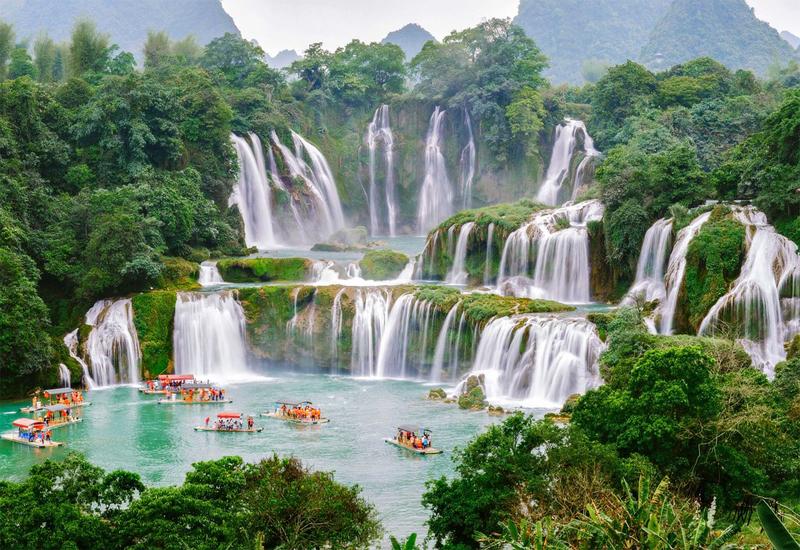
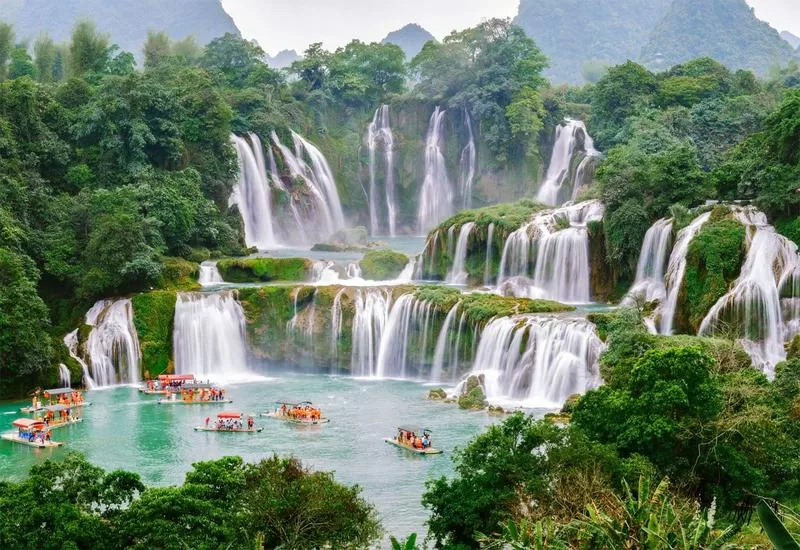
Ban Gioc Waterfall is the final major natural highlight, spreading across the Quay Son River on the Vietnam–China border. Rather than viewing it only from the riverbank, the tour includes a bamboo raft ride toward the foot of the falls, followed by time to explore the surrounding area on foot. Its broad cascades and border setting create a fitting finale to the two-province journey.
One of the strengths of the Ha Giang Cao Bang Tour is how naturally the two provinces complement each other. Ha Giang brings high-altitude roads, exposed karst mountains, and famous viewpoints, while Cao Bang gradually shifts the journey toward greener valleys, waterfalls, caves, and quieter rural roads. Rather than competing for attention, the two destinations create distinct halves of one Northeast Vietnam journey.
Ha Giang is the high-mountain chapter of the journey. The route crosses the Dong Van Karst Plateau, where steep limestone formations surround winding roads and ethnic villages. Ma Pi Leng Pass provides the most dramatic perspective, looking down toward Tu San Canyon and the Nho Que River before travelers descend for a boat trip between the cliffs. Beyond the landscapes, stops around Lung Cu and Lo Lo Chai introduce the cultural side of the region, with H’mong and Lo Lo communities, traditional houses, and long-established highland lifestyles.
Cao Bang changes both the scenery and rhythm of the Ha Giang Cao Bang Tour. Khau Coc Cha brings another spectacular mountain road, but beyond it the landscape becomes increasingly varied. Angel Eye Mountain opens onto grass meadows and karst lakes, while Phong Nam Valley follows the Quay Son River through rice fields and Tay-Nung villages. The journey then reaches Nguom Ngao Cave and Ban Gioc Waterfall, combining underground limestone formations with one of the route’s largest natural landscapes. Together, these places give Cao Bang a quieter, more rural character after Ha Giang’s high mountain scenery.
| Experience | Ha Giang | Cao Bang |
|---|---|---|
| Signature Landscape | High karst mountains | Valleys & waterfalls |
| Main Icon | Ma Pi Leng Pass | Ban Gioc Waterfall |
| River | Nho Que River | Quay Son River |
| Scenic Road | Tham Ma Pass | Khau Coc Cha Pass |
| Cultural Focus | H’mong & Lo Lo | Tay, Nung & other local communities |
| Atmosphere | Iconic & dramatic | Quieter & rural |
| Best For | Mountain scenery | Landscape variety |
Together, Ha Giang and Cao Bang give the tour its defining contrast: dramatic highland roads first, followed by a greener landscape of valleys, caves, rivers, and waterfalls.
Transportation is a central part of the Ha Giang Cao Bang Tour, as the journey connects Hanoi with two mountainous provinces before finishing in Cao Bang City. The route combines the initial transfer to Ha Giang with several days of motorbike travel, allowing the scenery and road journey itself to become part of the experience.
The journey begins with a transfer from Hanoi to Ha Giang, where the main Easy Rider adventure starts. After arriving in Ha Giang City, travelers prepare for the mountain route ahead before setting out toward Dong Van. This arrangement makes it possible to begin the trip from Hanoi without independently organizing the first connection to the northern highlands. The current inclusions list specifies the Hanoi-to-Ha Giang transfer as included.
An Easy Rider is an experienced local motorbike rider who drives while the guest travels as a passenger. On this tour, the riders handle the motorbike and mountain roads, leaving travelers free to enjoy the landscapes rather than concentrate on navigating every pass and switchback. The local Easy Riders know regional roads such as Ma Pi Leng and Khau Coc Cha and are familiar with riding them in different conditions and seasons.
Yes. The Ha Giang Cao Bang Tour also offers a self-drive option depending on the booking choice. However, travelers choosing to ride independently must have a valid licence that meets the tour requirements. Those who prefer not to manage a motorbike themselves can choose an experienced Easy Rider for the journey instead.
The route includes some of the most memorable mountain roads in both provinces. In Ha Giang, travelers cross the winding Tham Ma Pass and ride along Ma Pi Leng Pass before eventually following Highway 34 toward Cao Bang. The Cao Bang section introduces Khau Coc Cha, famous for its 14 stacked switchbacks, followed by the quieter Na Tenh Pass and its wide valley views.
This is a one-way journey rather than a loop returning to Ha Giang. After the final day around Ban Gioc, Nguom Ngao, and Vinh Quy, the tour finishes in Cao Bang City. Onward transfers to destinations including Hanoi, Ha Giang, Sapa, or Cat Ba can be arranged on request and are not included in the base price.
Accommodation on the Ha Giang Cao Bang Tour follows the character of the journey, combining a bungalow stay in Dong Van with local homestays as the route continues into Cao Bang. Meals are also integrated into the itinerary, giving travelers opportunities to eat regional dishes and share dinners at their overnight stops rather than relying on standardized tourist dining.
The first two nights are spent at Serenity Bungalow in Dong Van, providing a convenient base for exploring the Ha Giang section of the tour. After the first riding day from Ha Giang City, travelers stay here before continuing to Ma Pi Leng, the Nho Que River, Lung Cu, and Lo Lo Chai on Day 2, then return to Dong Van for another night.
After crossing from Ha Giang into Cao Bang, the third night is spent at a homestay in Bao Lac. The property overlooks the surrounding valley, offering a quieter setting after the day’s ride. In the evening, the itinerary includes dinner and a bonfire, with the opportunity to try local corn wine, commonly referred to as “happy water.”
The fourth night is spent at a homestay near Ban Gioc Waterfall after traveling through Khau Coc Cha, Angel Eye Mountain, and Phong Nam Valley. Staying in the area positions the group conveniently for the final day, when the Ha Giang Cao Bang Tour continues to Nguom Ngao Cave and Ban Gioc Waterfall before heading toward Cao Bang City.
Food is part of the regional experience throughout the journey. The itinerary begins with Ha Giang-style banh cuon, steamed rice rolls served with warm broth, followed by lunches at stops such as Yen Minh, Meo Vac, and Ha Quang. Evenings feature local meals at the accommodation, including the Bao Lac dinner and bonfire atmosphere with corn wine. The package includes 4 breakfasts and 9 main meals, focusing on practical local dining that fits naturally with the mountain journey and homestay experience.
The Ha Giang Cao Bang Tour is best suited to travelers who want an active journey through Northeast Vietnam rather than a conventional sightseeing holiday. With mountain roads, local homestays, cultural stops, short walks, and changing landscapes, the five-day route appeals to several different travel styles.
Solo travelers can join a small group of up to 10 guests, making it easier to share the journey without organizing transport and accommodation independently. The group format also provides opportunities to meet other travelers while still keeping the experience relatively personal.
For couples, the tour combines shared adventure with varied scenery and relaxed evenings at local accommodation. Mountain viewpoints, the Nho Que River, remote valleys, and homestay dinners create different experiences each day without requiring couples to plan the complex cross-province route themselves.
Travelers looking for an active road trip will find plenty of variety, from Ma Pi Leng and Tham Ma to the 14 switchbacks of Khau Coc Cha. Short viewpoint hikes, boat trips, cave exploration, and a possible waterfall swim add experiences beyond simply riding between destinations.
The route offers changing photographic environments throughout the five days. High karst mountains and winding roads dominate Ha Giang, while Cao Bang introduces grasslands, rice valleys, rivers, caves, and waterfalls. Small-group travel also makes scenic stops more practical.
The Ha Giang Cao Bang Tour includes opportunities to experience H’mong, Lo Lo, Tay, and other local communities. Village stops, traditional architecture, regional food, markets when timing allows, and homestay accommodation add a cultural dimension alongside the landscapes.
Travelers who want the motorbike experience without driving themselves can ride behind an experienced Easy Rider. The rider handles the bike and mountain roads, allowing guests to concentrate on the scenery and journey.
This tour may be less suitable for travelers who prefer luxury accommodation, very short riding days, or a resort-style holiday.
The best time for a Ha Giang Cao Bang Tour is generally spring and autumn, when mountain scenery and riding conditions are often more comfortable. Spring brings seasonal flowers and fresh landscapes, while autumn is particularly attractive for rice fields and photography. Summer offers greener scenery and stronger waterfalls but more rain, while winter is colder and requires warmer clothing.
Spring is a comfortable period for traveling through the mountain landscapes of Ha Giang and Cao Bang. Seasonal flowers add color to the karst scenery, while valleys gradually become greener as temperatures rise. Conditions can still change quickly at higher elevations, so carrying a light warm layer and rain protection remains useful during longer riding days.
Summer transforms both provinces into lush green landscapes. This period is particularly rewarding in Cao Bang, where increased rainfall can create stronger, fuller waterfalls, including Ban Gioc. Rice fields and valleys are also intensely green. However, travelers should expect more frequent rain, higher humidity, and potentially slippery conditions on mountain roads and walking trails.
Autumn is one of the most attractive periods for the Ha Giang Cao Bang Tour, especially for photographers. Rice landscapes can add golden tones to mountain valleys, while temperatures become more pleasant as summer heat and heavy rainfall gradually ease. The combination of agricultural scenery, mountain views, and comfortable conditions makes autumn well suited to long days on the road.
Winter brings a different atmosphere to Northeast Vietnam. Ha Giang’s karst mountains can appear especially dramatic in colder, mistier conditions, while Cao Bang enters a generally drier seasonal landscape. Temperatures can become quite cold on exposed mountain roads, particularly in the morning and evening, so warm layers, gloves, and wind protection are important.
| Season | Ha Giang | Cao Bang | Best For |
|---|---|---|---|
| Spring | Flowers & karst | Green valleys | Scenic riding |
| Summer | Lush mountains | Strong waterfalls | Nature |
| Autumn | Rice landscapes | Clearer scenery | Photography |
| Winter | Dramatic mountains | Dry-season landscapes | Adventure |
Preparing well before the Ha Giang Cao Bang Tour makes the five-day mountain journey more comfortable. Because the itinerary combines long riding sections, changing elevations, short hikes, homestays, caves, and waterfalls, practical packing is more useful than bringing too much luggage.
Bring only what you need for five days and keep everyday essentials in a compact bag. Traveling light makes luggage easier to manage between Ha Giang, Dong Van, Bao Lac, and Ban Gioc, particularly when most of the journey is completed by motorbike.
Temperatures can feel different between exposed mountain passes, valleys, and evening homestay stops. Pack lightweight layers that can be added or removed easily. A warmer outer layer is especially useful for early mornings, evenings, and higher sections of the route.
Comfortable shoes with reliable grip are recommended. The itinerary includes short walks and hikes, including the ridge viewpoint near Ma Pi Leng and the approximately one-kilometer walk toward the Khau Coc Cha viewpoint.
Mountain conditions can change during a riding day, so keep rain protection accessible rather than packed at the bottom of your luggage. Protecting phones, cameras, and other electronics from unexpected rain is also sensible.
Bring some Vietnamese cash for personal purchases, additional drinks, tips, and expenses outside the tour inclusions. The program specifically excludes drinks beyond water at meals, gratuities, and personal expenses.
Pack swimwear if you would like to take advantage of the swimming opportunity at Doc Lap / Na Tau Waterfall on the final day before continuing to Cao Bang City.
If you have dietary requirements, communicate them before departure so the team can plan appropriately for included meals and homestay dinners along the route. The tour package includes four breakfasts and nine main meals.
The Ha Giang Cao Bang Tour covers two mountainous provinces in five days, so unrealistic expectations or poor planning can make the journey less comfortable. Avoiding these common mistakes helps travelers adapt to the route, accommodation style, and pace of a multi-day Easy Rider adventure.
Large suitcases are inconvenient on a motorbike-based journey with several overnight stops. Carrying excessive luggage can also make daily packing and moving between accommodations more complicated. Avoid treating this like a hotel-based holiday where luggage remains in one place.
Some days combine multiple passes, attractions, meals, and village stops before reaching the next accommodation. Day 4, for example, travels from Bao Lac through Khau Coc Cha, Ha Quang, Angel Eye Mountain, and Phong Nam before reaching the Ban Gioc area.
Avoid relying only on sandals or smooth-soled footwear. Several experiences require walking beyond the roadside, including the short ridge hike near Ma Pi Leng and the approximately one-kilometer hike to the Khau Coc Cha viewpoint.
Do not assume that daytime temperatures represent conditions throughout the journey. The itinerary reaches exposed mountain roads and higher elevations, where mornings, evenings, wind, or changing weather can feel considerably cooler.
Choosing self-drive without meeting the licence requirements is a mistake. The tour offers self-drive only according to the booking choice and with a valid licence. Travelers who do not meet these requirements should choose an Easy Rider.
Ha Giang emphasizes dramatic karst mountains and high passes, while Cao Bang introduces quieter roads, valleys, caves, and waterfalls. Expecting identical scenery misses one of the main strengths of the journey: the contrast between the two provinces.
Avoid scheduling an inflexible departure immediately after arrival in Cao Bang City. The itinerary targets Cao Bang City in the afternoon, but mountain travel can be affected by road and weather conditions. Onward transfers can be arranged separately after the tour.
Choosing the right operator matters on a multi-day mountain journey. Serenity Cao Bang designs the Ha Giang Cao Bang Tour around a continuous two-province route, experienced local riders, small groups, clear inclusions, and practical support throughout the trip.
This itinerary is not simply two separate tours placed together. The route progresses naturally from Ha Giang through Dong Van and Meo Vac before crossing into Cao Bang toward Bao Lac, Khau Coc Cha, and Ban Gioc. This structure reduces unnecessary backtracking and keeps the five-day journey moving forward through Northeast Vietnam.
Serenity Cao Bang works with local Easy Riders who know the regional mountain roads. Their familiarity extends to major passes such as Ma Pi Leng and Khau Coc Cha, including where to slow down, where useful viewpoints are located, and how conditions can change between seasons.
An English-speaking guide accompanies the journey, helping travelers communicate and understand more about the places they visit. Beyond practical coordination, this creates opportunities to ask questions about regional food, history, ethnic communities, and everyday life along the route.
Each Ha Giang Cao Bang Tour is limited to a maximum of 10 guests. The small-group format allows a more flexible pace at viewpoints, villages, caves, and other stops while creating more opportunities to interact with guides, riders, and fellow travelers.
The program clearly outlines what is included and excluded before departure. Serenity Cao Bang also states that it does not add unexpected charges on the road or pressure travelers into surprise accommodation upgrades, helping guests understand the tour costs in advance.
Support remains available throughout the trip. If travelers encounter issues such as transport problems, lost belongings, or changes of plan, the program provides 24/7 assistance so there is a contact point during the journey.
The Ha Giang Cao Bang Tour brings two distinctive sides of Northeast Vietnam together in one continuous five-day journey from Hanoi. Rather than completing a conventional loop and returning along the same roads, the route moves through Ha Giang before crossing east into Cao Bang, creating a more varied experience across the northern mountains.
Ha Giang provides the dramatic first half, shaped by high karst mountains, deep river canyons, winding passes, and ethnic highland communities. Cao Bang changes the rhythm with quieter mountain roads, open valleys, limestone caves, rural landscapes, and waterfalls. Together, the two provinces offer a broader perspective on the scenery and local life of Northeast Vietnam.
With experienced Easy Riders handling the mountain roads and groups limited to a maximum of 10 guests, the journey balances adventure with a more personal small-group experience.
For travelers who want to explore Northeast Vietnam beyond a single destination, this Ha Giang Cao Bang Tour offers a practical way to experience both regions in one connected journey.
8:00 AM — Local breakfast and check out
9:30 AM — Quan Ba Heaven Gate and Twin Mountains
10:00 AM — Lonely Tree and Can Ty Slope
11:45 AM — Lunch in Yen Minh
1:00 PM — Sao Ha Village
2:30 PM — Tham Ma Pass
4:00 PM — Vu Family Mansion (H'mong King Palace)
6:00 PM — Arrive in Dong Van
8:00 AM — Breakfast at the homestay
8:30 AM — Ma Pi Leng Pass and Tu San Canyon viewpoint
10:00 AM — Boat trip on the Nho Que River
1:30 PM — Coffee break at Deo Gio (Windy Pass)
2:00 PM — Thien Huong Village and the 500-year-old tree
3:00 PM — Lung Cu Flag Tower
4:00 PM — Lo Lo Chai Village
8:00 AM — Check out and breakfast
9:30 AM — Rest stop at Meo Vac Information Centre
12:00 PM — Lunch at Ninh Chi Restaurant Afternoon – Thach Lam Waterfall
4:00 PM — Check in at Bao Lac homestay
7:00 PM — Dinner and bonfire with happy water
7:00 AM — Breakfast and gear up
12:00 PM — Lunch in Ha Quang
Afternoon — Angel Eye Mountain
Late Afternoon — Phong Nam Valley
5:30 PM — Check in at homestay near Ban Gioc Waterfall
7:00 PM — Local dinner
8:00 AM — Breakfast and ride to Nguom Ngao Cave
Late Morning — Ban Gioc Waterfall
12:00 PM — Lunch in Vinh Quy
Afternoon — Vinh Quy (Ba Quang) Grass Hills
Afternoon — Doc Lap / Na Tau Waterfall
2:30 PM — Arrive at Cao Bang City
4:00 PM — Tour ends in Cao Bang City
Helpful answers to common questions before booking.
Explore more itineraries from the same area or with a similar travel style.
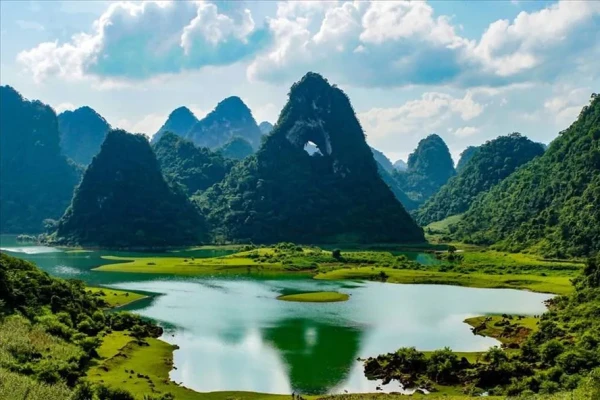
Book a 4-day Hanoi to Cao Bang and Ba Be Lake tour with local Easy Riders. Visit Pac Bo, Angel Eye Mountain, Ban Gioc Waterfall and Ba Be Lake.
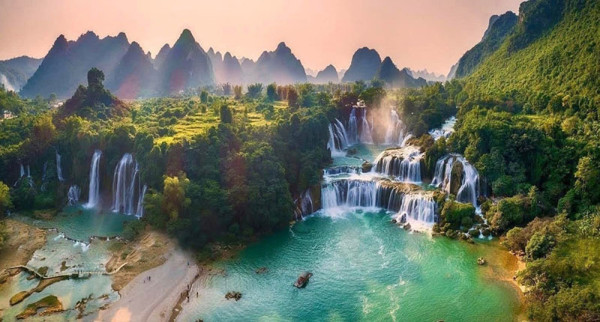
Discover the best Cao Bang 3 Days 3 Nights Tour with Ban Gioc Waterfall, Pac Bo, Nguom Ngao Cave, craft villages, Easy Riders, and small-group experiences.
Join our Cao Bang 2 Days 2 Nights Tour from Hanoi with Easy Rider, Ban Gioc Waterfall, Nguom Ngao Cave, Angel Eye Mountain, local villages and authentic homestays.
Join the best Cao Bang Day Tour to Ban Gioc Waterfall, Nguom Ngao Cave, Angel Eye Mountain and Phong Nam Valley. Book your full-day adventure today.